Construction, Decks & More

Top 10 FAQs About Wood Fasteners Answered by Experts
Let's start with FAQ #1: screw gauge numbers (#6, #8, #10) indicate diameter, not length—thicker numbers mean thicker screws. FAQ #2 teaches the 2/3 rule for length: about 2/3 of the screw should thread into the receiving piece. FAQ #3 proves you must always pre-drill hardwoods and near wood edges to prevent splitting.
On FAQ#4, Softwoods like cedar work with #8-9 gauge screws, but hardwoods like oak demand pre-drilling non-negotiably. FAQ #5 covers materials: pressure-treated lumber requires galvanized or stainless fasteners—bare steel fails in 1-2 years. Use hot-dipped galvanized for 10-15 years, stainless 304 for 25+ years, stainless 316 for coastal salt spray.
Never mix metals. FAQ #6 explains withdrawal strength depends on screw diameter, penetration depth, and wood density. A #10 screw in oak holds over 200 pounds; the same screw in pine holds half that. FAQ #7 busts the drywall screw myth—they snap under real pressure and rust outdoors.
FAQ #8 covers installation mistakes that kill projects: fast driving, insufficient pilot holes, fastening near edges, uneven spacing, angled installation. FAQ #9 proves premium fasteners save money on visible and critical work. FAQ #10 provides the complete decision framework: match wood type, load type, environment, visibility, code requirements, and budget to the right fastener.

Best Screws and Bolts for Docks in 2026
The best screws and bolts to use on a dock are stainless fasteners matched to your water: 304 stainless deck screws for inland freshwater, and 316 stainless within 5 km (3 miles) of the coast where salt spray corrodes lesser hardware fast.
Skip coated/composite screws—once that coating gets compromised, you’re inviting rust stains and fasteners that back out as the dock flexes.
For decking, use quality stainless deck screws (Eagle Claw 304/316), pre-drill near board ends, and countersink so every head lands flush (not proud, not buried). For structural and safety-critical connections, use 316 stainless through-bolts with washers and backing plates—especially for framing ties, cleats, and ladder brackets.
If you need a code-compliant lag-bolt alternative, use Simpson Strong-Drive SDS 316-grade structural connector screws where specs call for lag bolts, or Simpson Strong-Drive/SDWH Timber-Hex 316 stainless structural screws for ladder installs—paired with backing plates and tightened to spec.
For bumpers and edge trim, use 316 stainless screws with lock washers (add removable threadlocker in high-impact areas) and do a spring re-tighten after freeze-thaw. For ramps and walkways, use 316 stainless screws, leave 1/4-inch gaps between boards, and plan seasonal checks because ramps move and will loosen hardware over time.

Best Deck Screw Options of 2026
The best decking screws that you can buy for your 2026 deck building project according to reviews from verified buyers on Amazon are Eagle Claw SS decking screws—especially if you want the best stainless steel deck screws that don’t snap or strip on you mid-build.
Stainless steel deck screws are what pro deck builders use on hardwoods, softwoods, and composite boards, and Eagle Claw options in 304 and 316 help match the screw to your environment (everyday outdoor builds vs. coastal and marine exposure).
For preservative-treated lumber where budget and color-matching matter, coated deck screws can be a practical alternative in low-to-medium corrosion conditions, and options like Simpson Strong-Tie Deck-Drive DSV are often chosen for treated wood installs.
Other strong options include hardwood-focused screws like Deck-Drive DHPD and stainless choices like Strong-Drive DWP (305/316), depending on what you’re fastening and where you’re building. The right choice comes down to your decking material, exposure to moisture or salt, and basics like head style, drive type, thread design, and what size screws for deck boards you need.

Best Screws for Raised Garden Bed in 2026
If you're looking to build a raised garden bed that’s cheap and easy to build, but also durable and safe for your soil and vegetables or flowers, then choosing the right raised bed screws is essential.
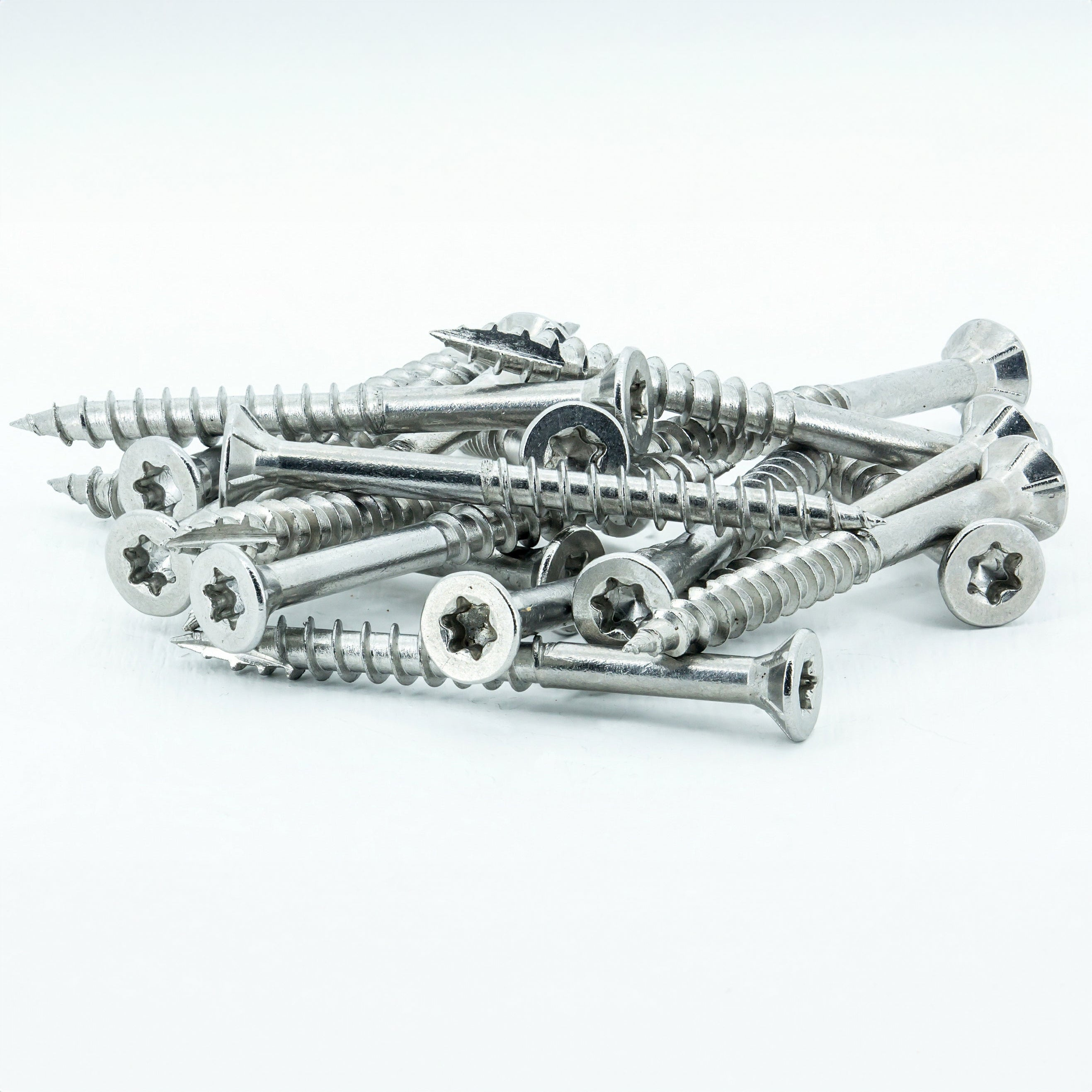
The best screws for raised garden beds in 2026 are stainless steel deck screws. Eagle Claw Stainless Steel Deck Screws are affordable and have the same quality as more expensive alternatives, made from 304 and 316 stainless steel, which won't rust, tarnish, or harm your soil and vegetables.
Deck-Drive™ DSV Deck Screws (Coated) are perfect for preservative-treated wood, with their Quik Guard® coating offering rust protection, and Type-17 points making installation smooth. Strong-Drive® DWP Stainless Steel Wood Screws are another option, providing a sharp point and Torx heads that make them easy to install without stripping.
In 2026, stainless steel deck screws are the best choice because they won’t leach harmful chemicals into the soil, and their corrosion resistance ensures your garden bed lasts for years.

Impact Driver History: How Builders Built Better, Faster, Pain-Free
The history of the impact driver starts way back in 1932 when pneumatic wrenches were invented, but they were stuck to compressors and air lines. Builders couldn't use them for general work—they were built for mechanics and heavy industry.
So for decades, we worked with one drill that did everything poorly. In the 1970s and 80s, Makita tried cordless tools, but those early batteries were garbage. You'd burn through them halfway through a deck. Milwaukee and DeWalt followed, but had the same problem. If you wanted real power, you needed that pneumatic compressor.
Then in 2005, Milwaukee figured out lithium-ion batteries. Game changer on the toolbelt. Suddenly you could plan a full day of work without babying your battery. But adoption was slow—contractors resisted paying extra for a tool that only drove screws.
By 2010, everything aligned. Battery prices dropped. Lithium-ion proved reliable. Contractors realized this solved problems they'd lived with forever: wrist strain, back pain, endless hours bent over. Within a few years, 80% of builders switched. The market exploded, accessories followed, and the whole industry transformed.

Top 10 Tips on Designing The Most Durable Fence (+...
To design the most durable fence, follow these ten professional tips from our 30 years of building fences inland and coastal.
Know what material you're working with—pressure-treated, vinyl, metal, composite—they all need different care. Get your posts right with the pedestal setup: dig 24-30 inches down, throw 2-4 inches of gravel at the bottom for drainage, then pour concrete on top of that and slope it 6-8 inches above ground to shed water away from the post. Skip the tar wrap around posts—it traps moisture instead of keeping it out. Use stainless steel Torx-head screws, and always put two minimum per connection point.
If you're thinking long-term, metal posts with wood boards can last 50+ years—you just swap out boards as they age instead of replacing the whole fence. Out on the Great Plains, Tornado Alley, or near the coast where wind hits hard? Design your fence so wind can pass through—shadowbox works, keep posts 6 feet apart maximum, and run diagonal bracing 7-8 feet between corners. Keep plants back 2-3 feet from your fence line, seal wood every 2-3 years, clean it once a year with a soft brush (don't pressure wash), and walk the fence line monthly when it's raining a lot to catch problems early. These practices prevent 80% of expensive repairs and extend fence life from 10 years to 25+ years.